
Hyperpigmentation and dark spots on the face are common after sun exposure, pregnancy, or acne. Discover their causes, the different types of pigment spots, as well as effective natural solutions, such as vitamin C and niacinamide.

Hyperpigmentation and dark spots on the face

What is hyperpigmentation?
Hyperpigmentation refers to an excessive production of melanin, the natural pigment responsible for skin color. This melanin is produced by specialized cells called melanocytes, located in the epidermis.
When melanocytes are overstimulated, they produce more pigment, leading to the appearance of dark spots and an uneven skin tone. These spots can be small and localized or more diffuse.
It is important to distinguish dark spots from moles and freckles. Moles are specific pigmented lesions, while freckles are genetic and intensify in the sun. Sunspots, on the other hand, are linked to an overproduction of melanin triggered by external or internal factors.
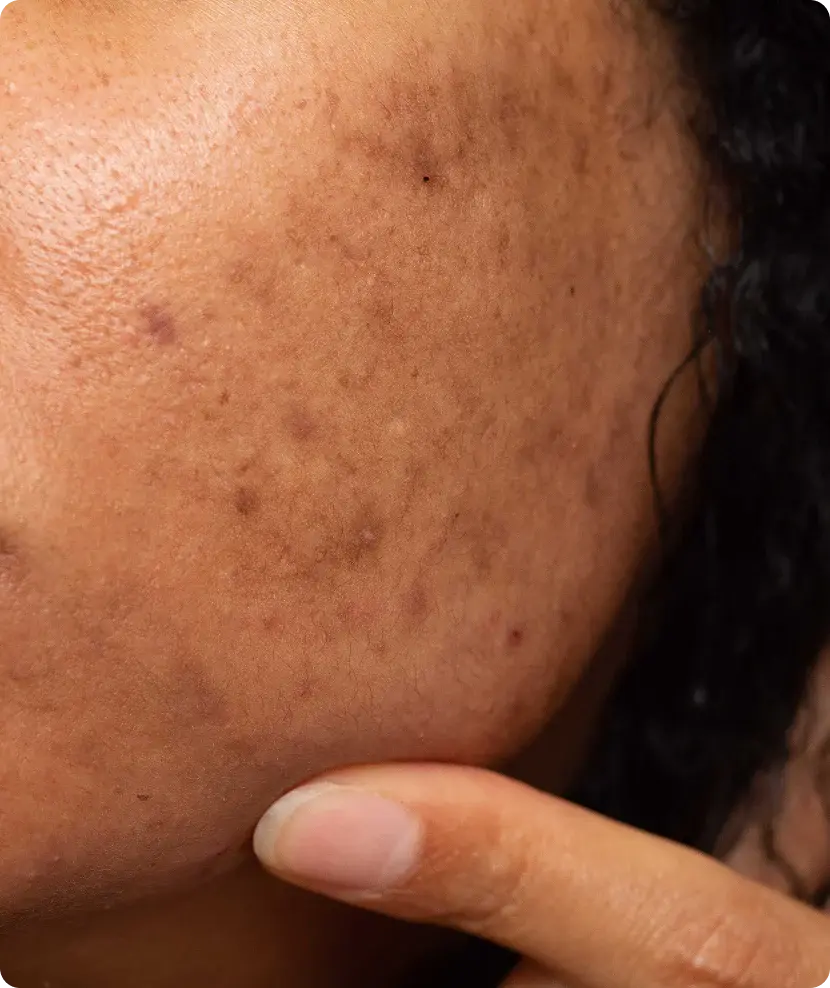
What are brown spots?
Brown spots are areas of skin where pigmentation is darker than the natural skin tone. They appear when there is an excessive production of melanin, the pigment responsible for skin color. This overproduction is triggered by melanocytes, located in the epidermis, in response to various factors such as UV exposure, hormonal changes, or inflammation.
Unlike moles, brown spots are generally flat and uniform. They can range from light brown to dark brown and often appear on the face, hands, or any area frequently exposed to the sun. Although they are benign in most cases, they can accentuate the appearance of an uneven complexion.
Causes of hyperpigmentation and facial dark spots
Exposure to UVA and UVB rays stimulates tyrosinase and increases melanin production, leading to facial dark spots. Hormones, acne, inflammation, certain photosensitizing medications, and oxidative stress also worsen hyperpigmentation.

Idoine Bio's approach to hyperpigmentation and dark spots
At Idoine Bio, we formulate natural skincare products in Quebec using Vitamin C and Niacinamide. Gentle on sensitive skin, our formulas target dark spots and promote a more even skin tone.
Different types of brown spots: how to identify them
Not all brown spots are alike. Identifying the type of hyperpigmentation helps guide the appropriate treatment.
Solar lentigines, often called age spots or sun spots, appear on exposed areas such as the face, hands, or shoulders. They are linked to cumulative UV exposure and appear as flat, well-defined spots.
Melasma manifests as symmetrical brownish patches, usually on the cheeks, forehead, or upper lip. Melasma is a common form of brown spots in women. It is particularly common during pregnancy or when taking hormonal contraceptives.
Post-inflammatory hyperpigmentation is another common form. It occurs after skin inflammation, such as acne scars, eczema, or irritation. Once the skin has healed, a darker mark persists.
Senile lentigo often appears after the age of 40. It is usually oval, flat, and linked to skin aging, in association with sun exposure.
Melasma, sun spots, or post-inflammatory hyperpigmentation: what's the difference?
Melasma is distinguished by its symmetry and hormonal link. Solar lentigines are localized on exposed areas and are sharper. Post-inflammatory hyperpigmentation follows a lesion or an acne flare-up.
The color can vary from light brown to dark brown depending on the depth of the pigment. The main trigger often helps identify the type.
Each type requires a different approach, which explains the importance of understanding the causes before starting treatment.
How to prevent the appearance of brown spots daily
Prevention is the first step even before looking for how to remove brown spots.
Daily application of sun protection with an SPF 30 or higher is essential, even on cloudy days. During Quebec summers, reapplication every two hours is recommended for prolonged exposure.
Wearing protective clothing and a wide-brimmed hat significantly reduces direct exposure.
Applying antioxidants like vitamin C in the morning helps neutralize free radicals before they stimulate melanin production.
Avoid picking pimples or scabs, as this promotes post-inflammatory hyperpigmentation.
Effective natural ingredients against hyperpigmentation and brown spots
A natural treatment for facial pigment spots relies on scientifically validated and well-tolerated active ingredients.
- Vitamin C, or ascorbic acid, is one of the most studied active ingredients. It inhibits tyrosinase, brightens the complexion, and protects against UV-induced oxidative stress.
- Niacinamide works by blocking the transfer of melanin to the skin's surface. It is ideal for sensitive and redness-prone skin.
- Kojic acid, of natural origin, is recognized as a tyrosinase inhibitor. It is a gentler alternative to synthetic agents.
- Azelaic acid helps reduce excessive melanin production and is particularly suitable for melasma and post-inflammatory hyperpigmentation.
- AHAs, such as glycolic acid and lactic acid, promote the exfoliation of pigmented cells on the surface. Phytic acid, from rice bran, also has brightening properties.
- Licorice extract and resveratrol complete the action by providing an antioxidant and soothing effect. Green tea extract helps reduce inflammation.
Choosing natural and certified formulations helps avoid controversial ingredients and respect the skin's microbiome. Discover our targeted skincare products on Idoine Bio.
Niacinamide, vitamin C, kojic acid: which active ingredient to choose depending on your spot type?
For melasma, prioritize niacinamide combined with azelaic acid.
For sun spots, vitamin C, combined with a gentle AHA exfoliant, is effective.
For post-inflammatory hyperpigmentation, niacinamide and licorice extract are particularly suitable for sensitive skin.
How to remove brown spots: effective treatments and routines
If you're wondering how to remove brown spots, consistency is key.
An effective skincare routine includes gentle cleansing, a light exfoliant once or twice a week, a serum concentrated in targeted active ingredients for spots, a moisturizing cream, and daily sun protection.
Results are generally visible after eight to twelve weeks of regular use.
Professional options such as chemical peels, laser, intense pulsed light (IPL), or microneedling can be considered in some cases. A dermatologist should be consulted if a spot changes shape, color, or size.
How long does it take to see results on brown spots?
Superficial spots can lighten in four to six weeks.
Deeper pigmentations require three to six months. Daily application of sun protection with SPF remains essential to stabilize results.
Hyperpigmentation and organic skin: why avoid controversial ingredients like hydroquinone
Hydroquinone is a depigmenting agent used in some conventional creams. Although effective, it is considered a controversial ingredient.
More and more consumers are turning to certified natural formulations. Organic certifications like ECOCERT or COSMOS guarantee ingredient transparency and the absence of aggressive synthetic agents.
At Idoine Bio, we prioritize active ingredients of natural origin recognized for their effectiveness and gentleness, respecting sensitive skin and the environment.
Brown spots and skin types: adapting your approach according to your phototype
The Fitzpatrick scale classifies phototypes from I to VI according to sun reaction.
Fair skin has a high risk of solar lentigines and should introduce active ingredients gradually.
Medium skin is more prone to melasma and post-inflammatory hyperpigmentation, especially in cases of acne.
Dark and very dark skin has an increased risk of reactive pigmentation. Powerful exfoliants and certain laser treatments should be used with caution.
Frequently Asked Questions
In most cases, brown spots do not disappear completely without intervention. Some superficial marks may fade slightly with the natural renewal of the skin, especially if sun exposure is reduced. However, without daily sun protection with an SPF 30 or higher, they tend to darken or spread. Repeated exposure to UV rays reactivates melanin production, which stabilizes or worsens hyperpigmentation. A tailored routine including targeted active ingredients and consistent sun protection is generally necessary to see visible and lasting improvement.
Yes, it is possible to treat hyperpigmentation with a natural approach, provided that recognized active ingredients are used and consistency is maintained. Ingredients like vitamin C, niacinamide, naturally sourced azelaic acid, natural kojic acid, and gentle AHAs act on different pigmentation mechanisms. They can inhibit tyrosinase, limit melanin transfer, and promote cell renewal. Well-designed natural formulations also respect sensitive skin and the skin microbiome. Results appear gradually, generally after several weeks of regular application combined with daily sun protection.
Melasma is a form of hyperpigmentation primarily triggered by hormones. It often appears during pregnancy, with the use of hormonal contraceptives, or during hormonal fluctuations. It presents as symmetrical patches on the cheeks, forehead, or upper lip. Sun spots, also known as solar lentigines, are linked to cumulative UV exposure. They are generally more localized, well-defined, and appear on exposed areas such as the face or hands. The distinction is important, as the treatment approach can vary depending on whether the origin is hormonal or solar.
Brown spots can appear at any age. Although they are more common after age 40 due to accumulated sun exposure and skin aging, they can also affect younger adults. Pregnant women can develop melasma in their twenties or thirties. Teenagers and young adults prone to acne can also experience post-inflammatory hyperpigmentation. The determining factor is therefore not solely age, but rather UV exposure, hormonal fluctuations, skin inflammation, and genetic predisposition.