Uneven skin tone: how to naturally even it out, without masking, without making it worse
Uneven skin tone can manifest in several ways: dark spots on the face that persist after a breakout, dull and uneven complexion that lacks radiance despite a meticulous routine, or darker areas that appear after summer or during periods of stress.
If you're looking for how to even out your skin tone naturally, you don't just want to cover it up with makeup. You want to understand, correct, and balance without irritating your skin.
Good news: evening out your skin tone without makeup is possible. But it requires a structured approach that addresses the actual biological causes of uneven facial skin tone, rather than its visible symptoms.

Why your skin tone becomes uneven: the real causes
-
Uneven skin tone is not a skin type
It is a skin condition triggered by specific biological mechanisms, not a permanent category, like dry or oily skin.
-
Overactivation of melanocytes and excessive melanin production
Melanocytes produce melanin, the pigment responsible for skin color. Under the effect of UV exposure, inflammation, or hormonal fluctuations, they produce an excessive amount of melanin, leading to the appearance of dark spots on the face.
-
UV exposure, the main trigger
UV rays directly stimulate melanocytes. Repeated exposure, even moderate, can exacerbate an uneven facial complexion over time.
-
Stress, cortisol, and post-inflammatory hyperpigmentation
Chronic stress and lack of sleep increase cortisol. This hormone stimulates sebum secretion, promotes inflammation, and sends signals to melanocytes. Possible result: post-inflammatory hyperpigmentation after blemishes.
-
Oxidative stress and free radicals
Pollution, UV rays, and smoking generate free radicals. This oxidative stress disrupts melanin regulation and accentuates visible irregularities in skin tone.
-
Weakened skin barrier
When the skin barrier is compromised, water evaporates more quickly, dead cells accumulate, and sebum oxidizes. The complexion becomes dull and uneven, and pigmented areas appear more pronounced.
-
Aging and slowed cellular renewal
With age, the cell cycle slows down. Accumulated UV damage becomes more visible, and irregularities persist longer.
-
What this implies for the routine
Treating uneven skin tone involves acting on melanin regulation, reducing inflammation, and restoring the skin barrier, rather than simply masking spots.
Dull complexion or uneven skin tone, what's the difference?
A dull complexion corresponds to a lack of surface radiance. It is often linked to an accumulation of dead cells or dehydration.
Uneven skin tone implies a deeper color imbalance, due to an uneven distribution of melanin.
Making the distinction is essential. A simple exfoliant can revive a dull complexion, while an uneven skin tone requires a targeted pigmentation strategy.
Natural active ingredients that truly even out skin tone
For natural and effective treatment of facial dark spots, the choice of active ingredients is crucial.
Niacinamide, also known as vitamin B3, is one of the most versatile. It regulates the transfer of melanin to surface cells, reduces redness, and helps visibly tighten pores. It is particularly suitable for sensitive skin with an uneven facial complexion.
Vitamin C, in the form of ascorbic acid, is a powerful antioxidant. It inhibits tyrosinase, a key enzyme in melanin production. It also stimulates collagen production, which improves overall radiance. However, at high concentrations, it can become unstable and irritating. Bioavailability and formulation are essential.
AHAs, such as glycolic acid or lactic acid, promote cellular renewal. Used in moderation, they help fade dark spots on the surface of the facial skin. In excess, they weaken the skin barrier and increase photosensitivity, which can, paradoxically, worsen pigmentation.
Certain plant-based alternatives deserve attention. Kojic acid, derived from mushrooms, acts as a gentle depigmenting agent. Licorice extract helps even out skin without irritating it. Turmeric has anti-inflammatory properties useful for limiting post-inflammatory hyperpigmentation.
Boerhavia diffusa is an advanced botanical active ingredient still rarely mentioned in general guides. It regulates melanin synthesis and helps gradually even out uneven skin tone.
Finally, hyaluronic acid supports the whole process. Well-hydrated skin maintains a functional barrier. This allows pigmentation-targeting active ingredients to work effectively without causing irritation.
How to layer active ingredients without triggering more pigmentation
-
Application order matters.
-
After cleansing, apply a light hydrating serum. Then, a targeted active ingredient like niacinamide or vitamin C. Seal with a moisturizer. In the morning, always finish with an SPF.
-
Avoid combining direct vitamin C and strong AHAs in the same routine without an adaptation phase. Introduce one new active ingredient at a time, over several weeks.
-
Consistency always outweighs intensity.
The natural routine to even out skin tone, morning and evening
Knowing how to naturally even out your skin tone requires a clear routine.
In the morning, start with a gentle cleanser suited to your skin type. An antioxidant serum with vitamin C or niacinamide helps prevent new dark spots on the face. Then apply a light moisturizer. Finish with a broad-spectrum SPF, a non-negotiable step to protect melanocytes from UV exposure.
In the evening, if you wear SPF or makeup, opt for a double cleanse. Incorporate an AHA once or twice a week, never daily if your skin is sensitive. Then apply a richer repairing cream or a suitable plant oil.
Add a circular massage or gua sha once or twice a week to support microcirculation, which improves the radiance of a dull and uneven complexion.
Avoid alcohol-based toners, synthetic fragrances, and aggressive physical exfoliants. They disrupt the barrier and indirectly stimulate melanocytes.
The first visible improvements usually appear between four and eight weeks. Deep pigmentation requires more patience.
Steps of the morning routine
Choose a gentle, non-stripping cleanser. Apply the serum to slightly damp skin to promote penetration. SPF should always be the last step, even on cloudy days.
Evening routine and weekly exfoliation frequency
Chemical exfoliation uses acids to dissolve the bonds between dead cells. Physical exfoliation relies on mechanical action. For an uneven facial complexion, prefer the former, as it is more uniform.
Evening is ideal for active ingredients, as the skin enters a regeneration phase. Adjust the frequency according to your sensitivity. Reactive skin may limit exfoliation to once a week.
Diet and lifestyle for an even skin tone
Diet directly influences uneven skin tone.
Excess sugar promotes glycation, a process that stiffens collagen fibers and increases oxidative stress. The skin appears duller and facial dark spots are more visible.
Foods rich in beta-carotene, vitamin C, and omega-3 support the integrity of the skin barrier and contribute to regulating melanin production.
Lack of sleep disrupts cellular renewal. Cortisol increases, which stimulates sebum secretion and inflammation. This chain can lead to post-inflammatory hyperpigmentation.
Internal hydration and topical care are complementary. Dehydrated skin accentuates the appearance of a dull and uneven complexion.
Limiting tobacco and alcohol reduces oxidative stress and supports skin tone uniformity.
How Idoine Bio supports skin with uneven tone
Many clients with uneven skin tone have already tried products that irritated their sensitive skin or promised unrealistic results.
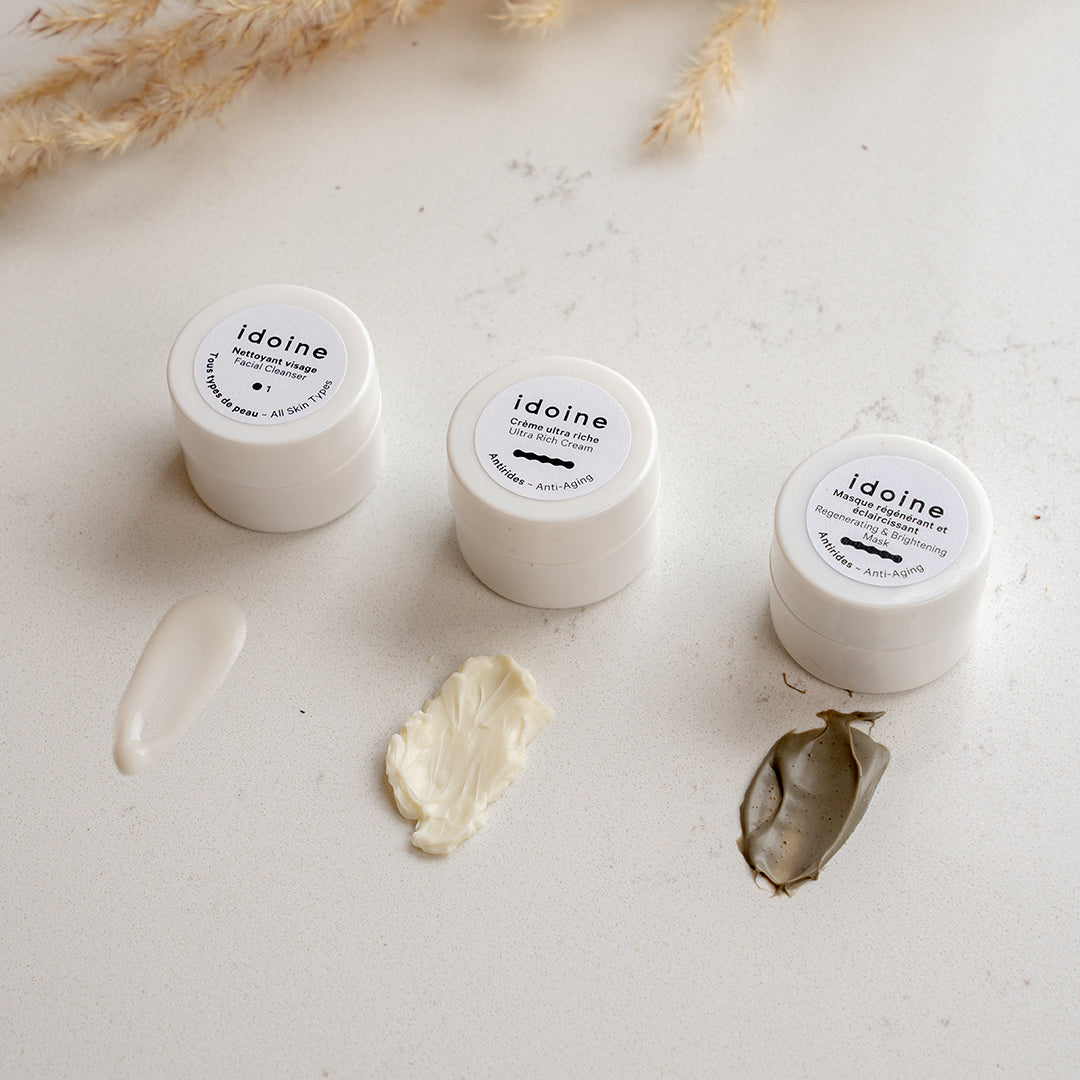
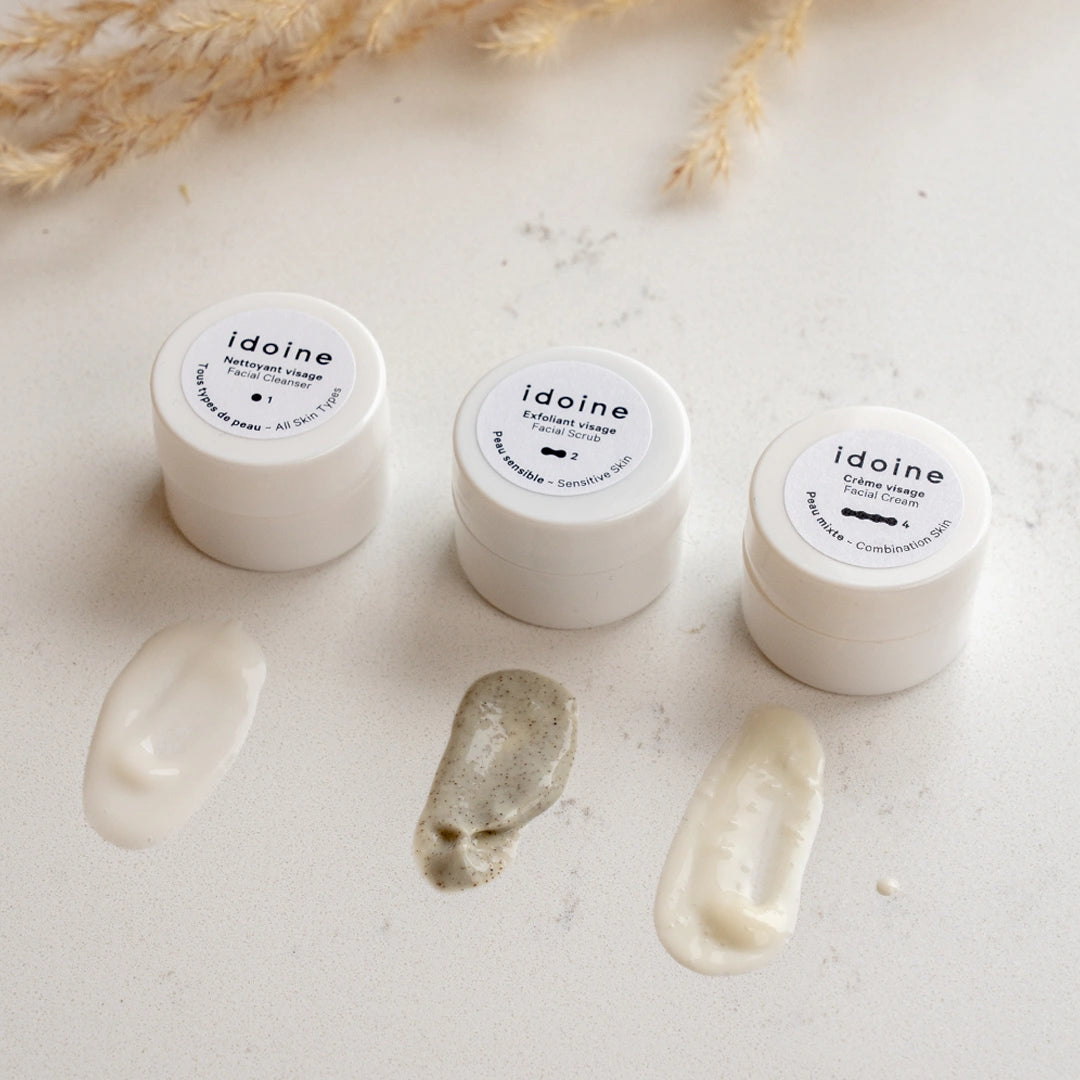
At Idoine Bio, the approach is based on melanin regulation and respect for the skin barrier. Organic formulations prioritize certified ingredients, selected for their tolerance and progressive efficacy.
Transparency guides every choice: concentration and bioavailability take precedence over a long list of ingredients. A natural and consistent routine, adapted to uneven skin tone, allows action without aggravating the situation.
Conclusion
Uneven skin tone never appears by chance. It results from a precise imbalance between melanin, inflammation, UV exposure, the skin barrier, and internal factors such as stress or sleep.
Therefore, seeking to naturally even out your skin tone requires more than just a simple brightening product. It involves understanding the triggers, choosing suitable active ingredients, such as niacinamide or vitamin C, respecting the exfoliation rhythm, and protecting the skin daily with an SPF.
Evening out skin tone without makeup is possible, but it is consistency, gentleness, and an approach focused on the skin barrier that allows for lasting improvement of an uneven facial complexion.
By taking care of the skin as a whole, from topical routines to lifestyle, you create the necessary conditions to gradually rebalance pigmentation, without masking or aggravating it.
Frequently asked questions about uneven skin tone
What causes uneven skin tone on the face?
Uneven facial skin tone is due to hyperactivation of melanocytes. UV exposure, hormonal changes, and inflammation stimulate melanin production. Pimples can leave post-inflammatory hyperpigmentation. With age, slower cell renewal accentuates these color variations.
Can you really even out your skin tone naturally without makeup?
Yes. Evening out skin tone without makeup is possible through a natural and consistent routine. Regular use of niacinamide and vitamin C, combined with daily SPF, can progressively correct imbalances. Makeup conceals, while skincare acts at the source.
How long does it take to see results with a natural routine for uneven skin tone?
The cell renewal cycle lasts twenty-eight to forty days. The first superficial improvements appear in four to six weeks. For a deeper natural treatment of facial dark spots, allow eight to twelve weeks of consistency. Without SPF, results will not be maintained.
Which natural active ingredient is most effective for evening out skin tone?
Niacinamide is often the most versatile and best tolerated. Vitamin C is ideal for restoring radiance. Kojic acid and licorice extract target more pronounced pigmentations. The choice depends on the type of uneven skin tone and skin sensitivity.
Does diet really impact uneven skin tone?
Yes. A diet rich in antioxidants limits oxidative stress. Omega-3s support the skin barrier. Beta-carotene contributes to skin tone uniformity. Conversely, excess sugar and lack of sleep increase cortisol levels, stimulate sebum production, and promote inflammation, which can worsen a dull and uneven complexion.