How to choose the right facial cleanser for your skin type
Introduction: why choosing the right face cleanser changes everything
We often talk about serums, creams, or "star" active ingredients. Yet, face cleanser is the most decisive product in a routine. Used daily, sometimes twice a day, it directly influences the balance, tolerance, and overall health of the skin.
Many people wonder how to choose the right face cleanser, but quickly become overwhelmed by ingredient lists, marketing promises, and contradictory advice. The result: skin that feels tight, reacts, or seems to be "getting worse" despite appropriate care.
In this article, we will see which face cleanser to choose based on your skin type, how to read an ingredient list without being an expert, which components to avoid for sensitive skin, what gentle cleansing really means, and what to wash your face with to have healthy skin in the long term – without medical jargon or exaggerated promises.
Understanding your skin type before choosing a face cleanser
Even before looking at ingredients, it is essential to understand how your skin works. Many bad choices come from incorrect identification of skin type.
Dry skin, dehydrated skin: a common confusion
Dry skin naturally lacks lipids. Dehydrated skin lacks water, often due to overly aggressive cleansing. In both cases, an overly stripping cleanser worsens the situation.
Common indicators:
-
Tightness after cleansing
-
Feeling of discomfort even without applying any product
-
Dull or rough skin
Combination or oily skin: beware of over-cleansing
Oily skin does not need to be stripped. On the contrary, overly aggressive cleansing can stimulate sebum production.
Signs of an unsuitable cleanser:
-
Increased shine throughout the day
-
Skin feeling "squeaky clean"
-
Appearance of imperfections despite frequent cleansing
How to read an ingredient list without being overwhelmed
Reading a cosmetic label can seem intimidating. However, all it takes is knowing a few simple principles to make an informed choice.
Focus on the first 5-7 ingredients
Ingredients are listed in descending order of concentration. The first components therefore give a good indication of the product's nature.
-
Many aggressive cleansing agents at the beginning of the list = potentially stripping cleansing
-
Presence of soothing or moisturizing ingredients = more balanced formulation
Identify cleansing agents (surfactants)
Not all surfactants are created equal. Some are known to be milder and better tolerated, especially for daily use.
A face cleanser recommended by dermatologists generally favors:
-
Mild surfactants
-
A short and readable formulation
-
Few or no allergenic fragrances

Which ingredients to avoid for sensitive or reactive skin
Sensitive or reactive skin needs to be particularly careful. Some ingredients are known to increase the risk of irritation when used daily.
Often problematic ingredients
Without an exhaustive list, some components are frequently associated with:
-
Burning sensations
-
Diffuse redness
-
Tingling after cleansing
This notably includes:
-
Overly harsh cleansing agents
-
Strong fragrances
-
Drying alcohols in high concentration
How often should you wash your face for healthy skin?
The question "what to wash your face with for healthy skin" always goes hand in hand with "how often."
Morning and evening: is it always necessary?
-
Evening: yes, to remove impurities, pollution, and excess sebum
-
Morning: it depends on the skin
For some sensitive or dry skin types, a gentle cleanse in the evening and a simple rinse with water in the morning may suffice.
When should you change your face cleanser?
It is recommended to re-evaluate your cleanser when:
-
Skin becomes more sensitive than before
-
Tightness appears without apparent reason
-
The season changes (cold, heat, humidity)
Changing products is not a failure: it is often a logical adaptation to the skin's real needs.
What does "gentle cleansing" really mean?
The term "gentle" is widely used but rarely explained. In practice, gentle cleansing means:
-
Cleansing without a feeling of tightness
-
Not causing immediate redness
-
Leaving the skin comfortable after rinsing
Simple indicator
If you feel the need to apply a cream immediately after cleansing to "relieve" your skin, the product is probably too aggressive.
Gentle cleansing supports the skin's natural function instead of disrupting it. This is why it is often highlighted in dermatological recommendations for daily use.
Idoine Bio's approach: helping to choose without over-promising
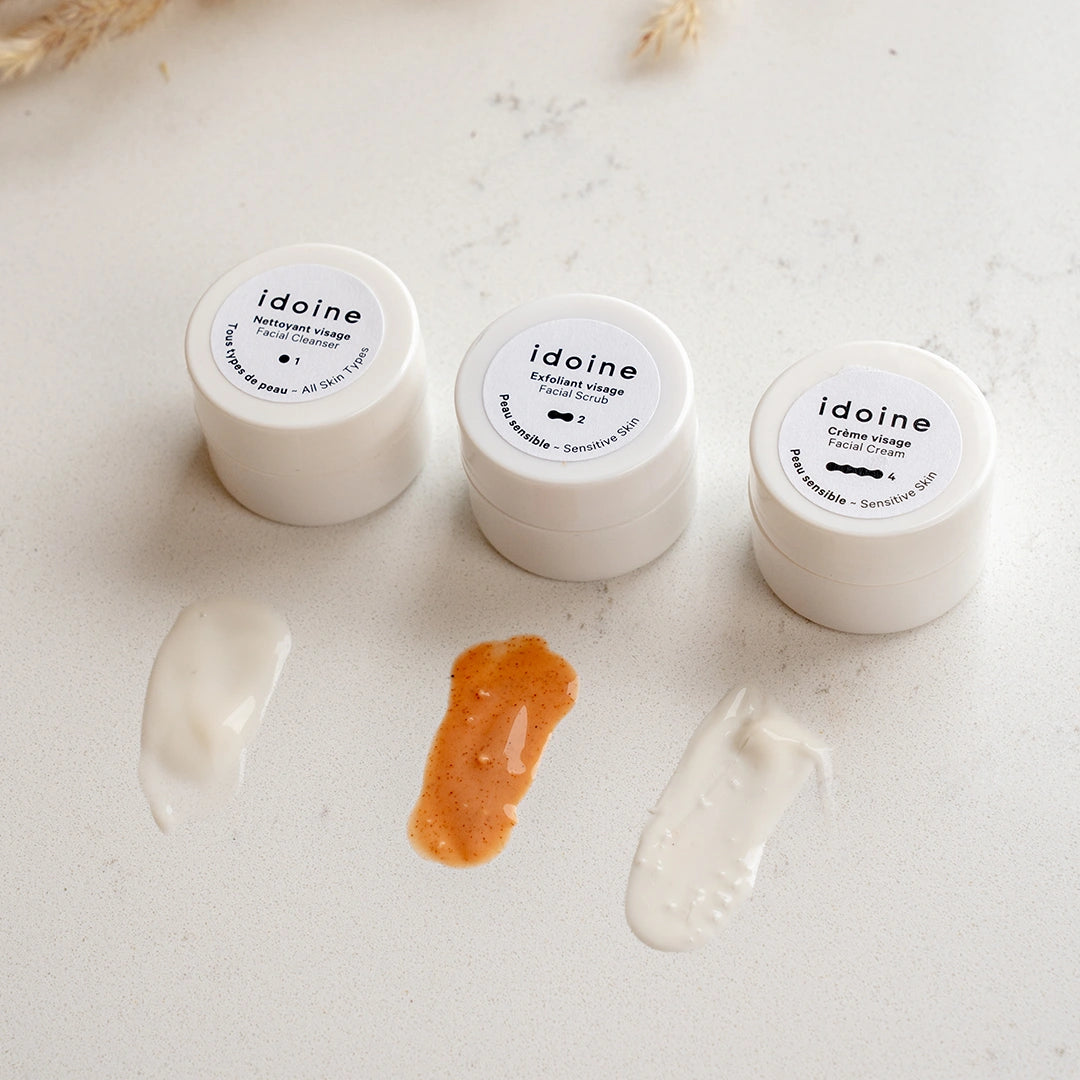
At Idoine Bio, the choice of a face cleanser is based on a simple logic: respecting the skin before trying to transform it. The products are formulated to be integrated into coherent routines, without seeking to multiply active ingredients or promises.
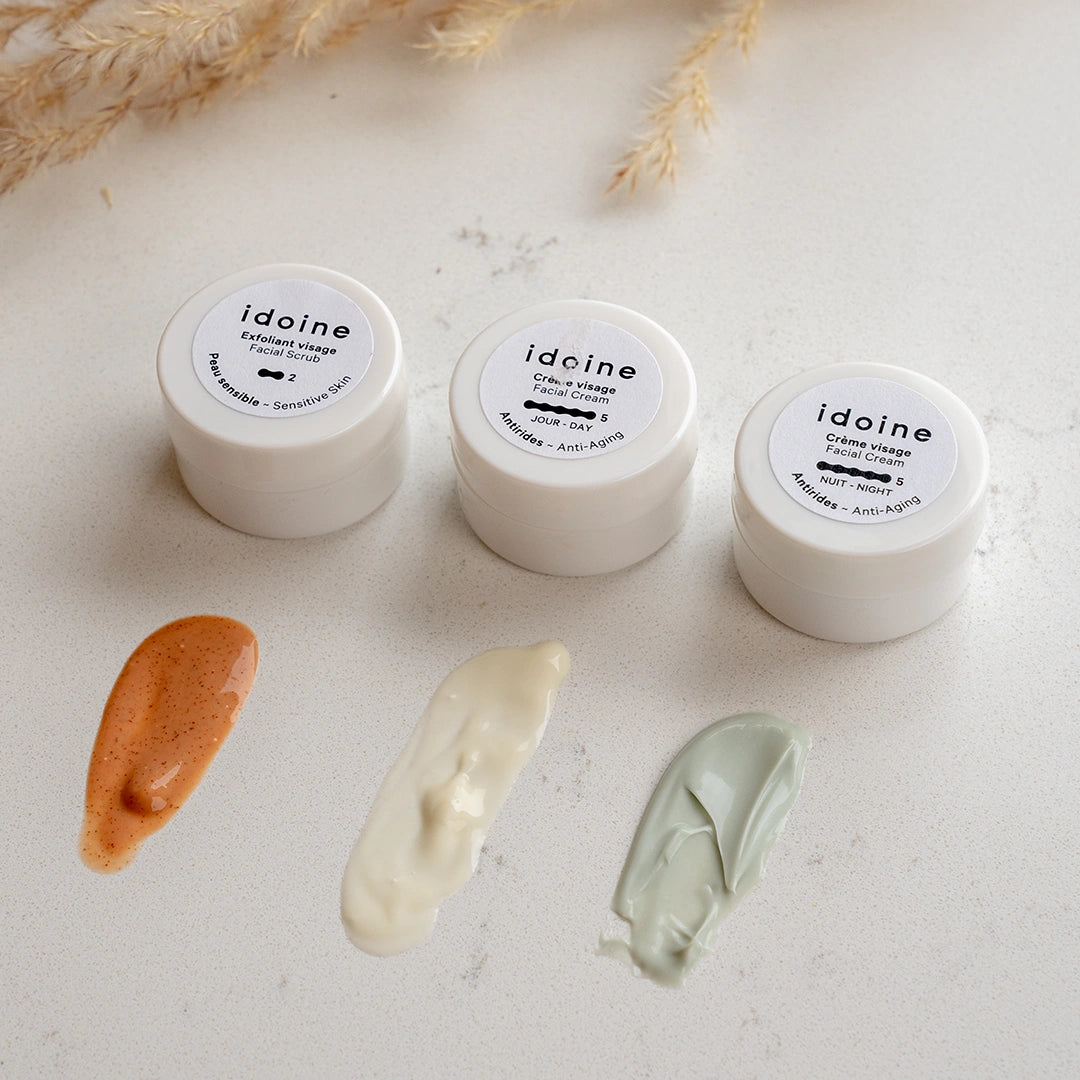
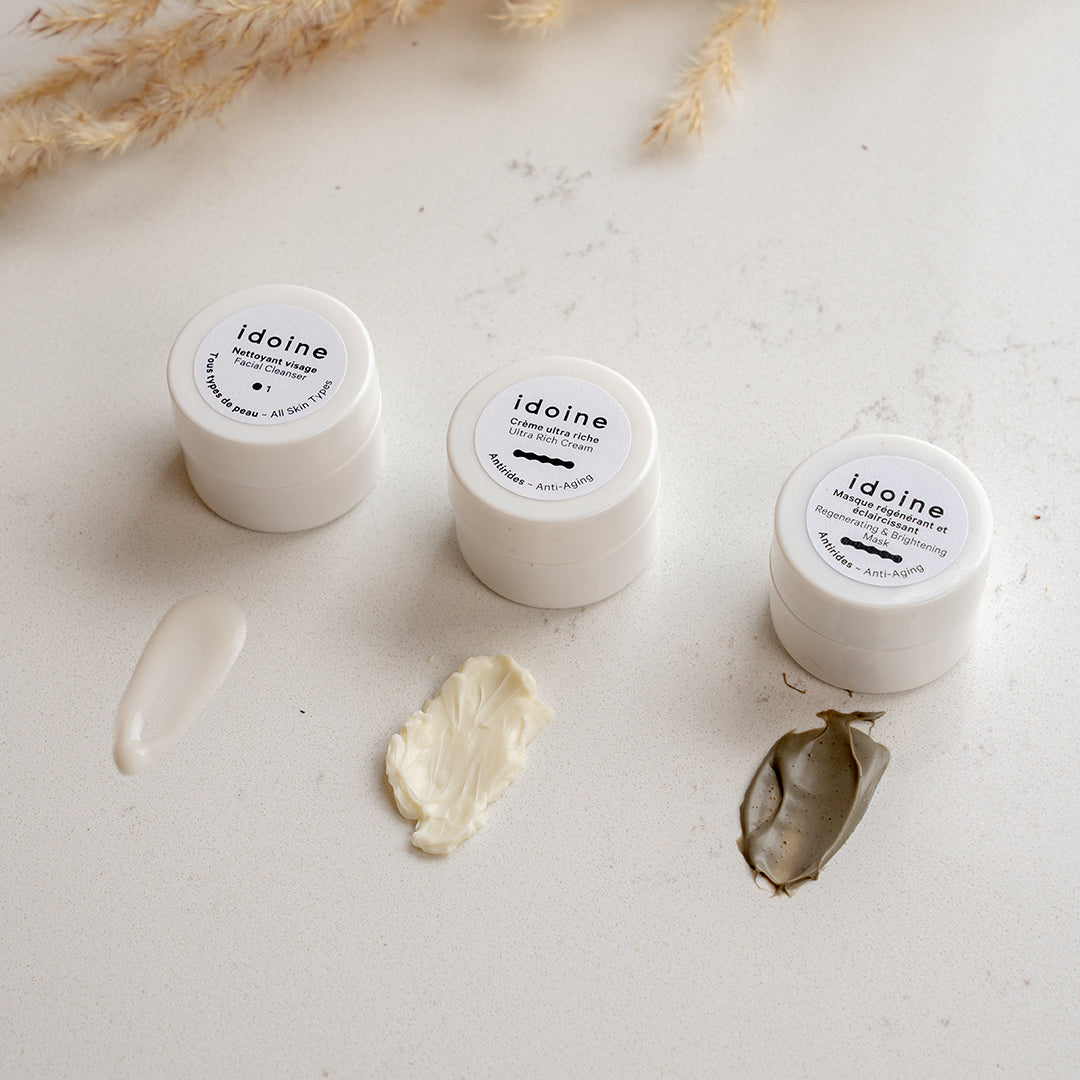
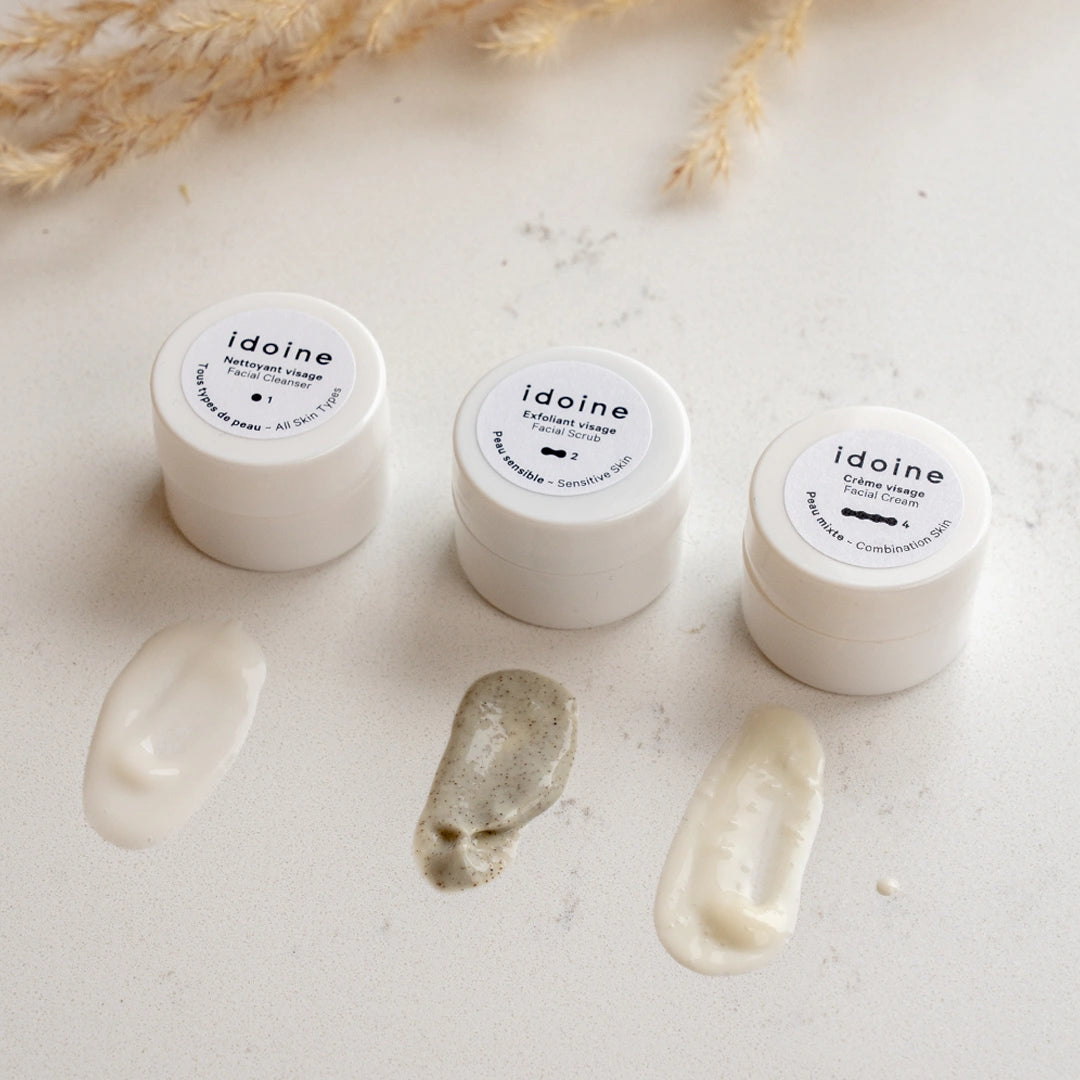
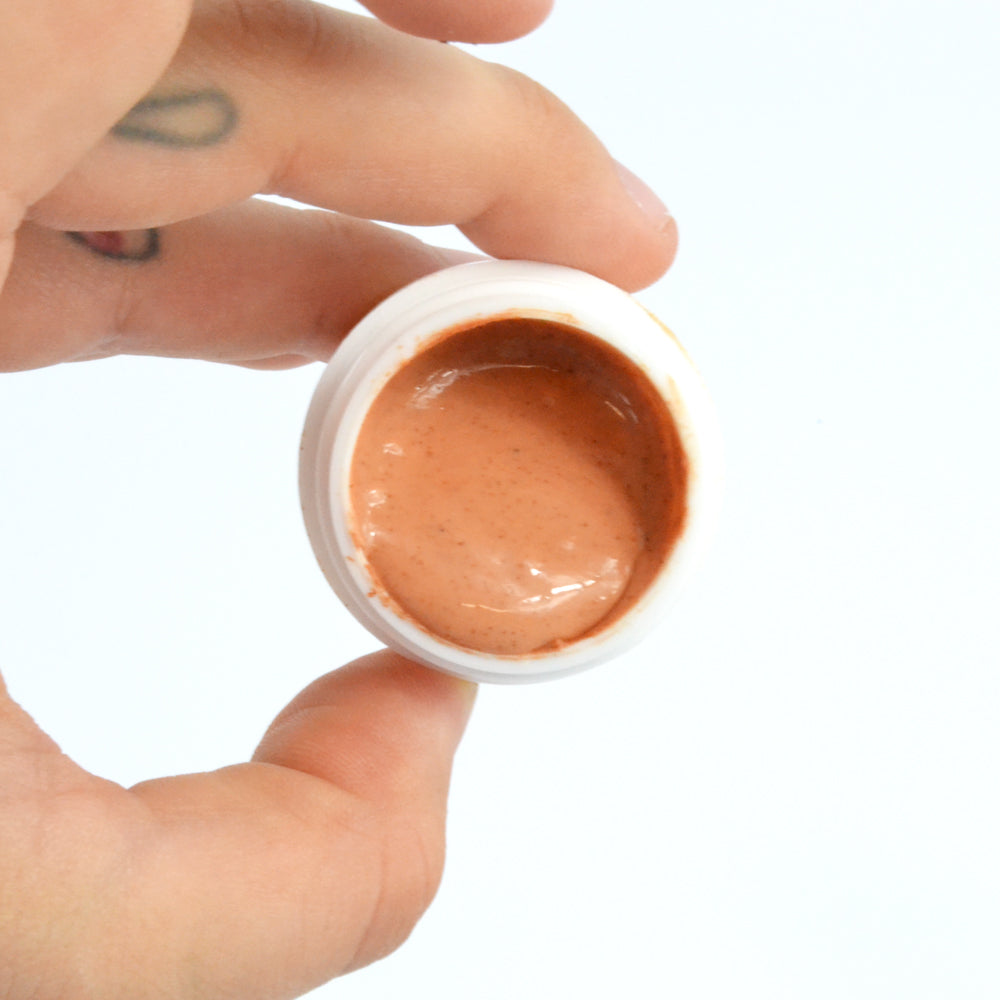
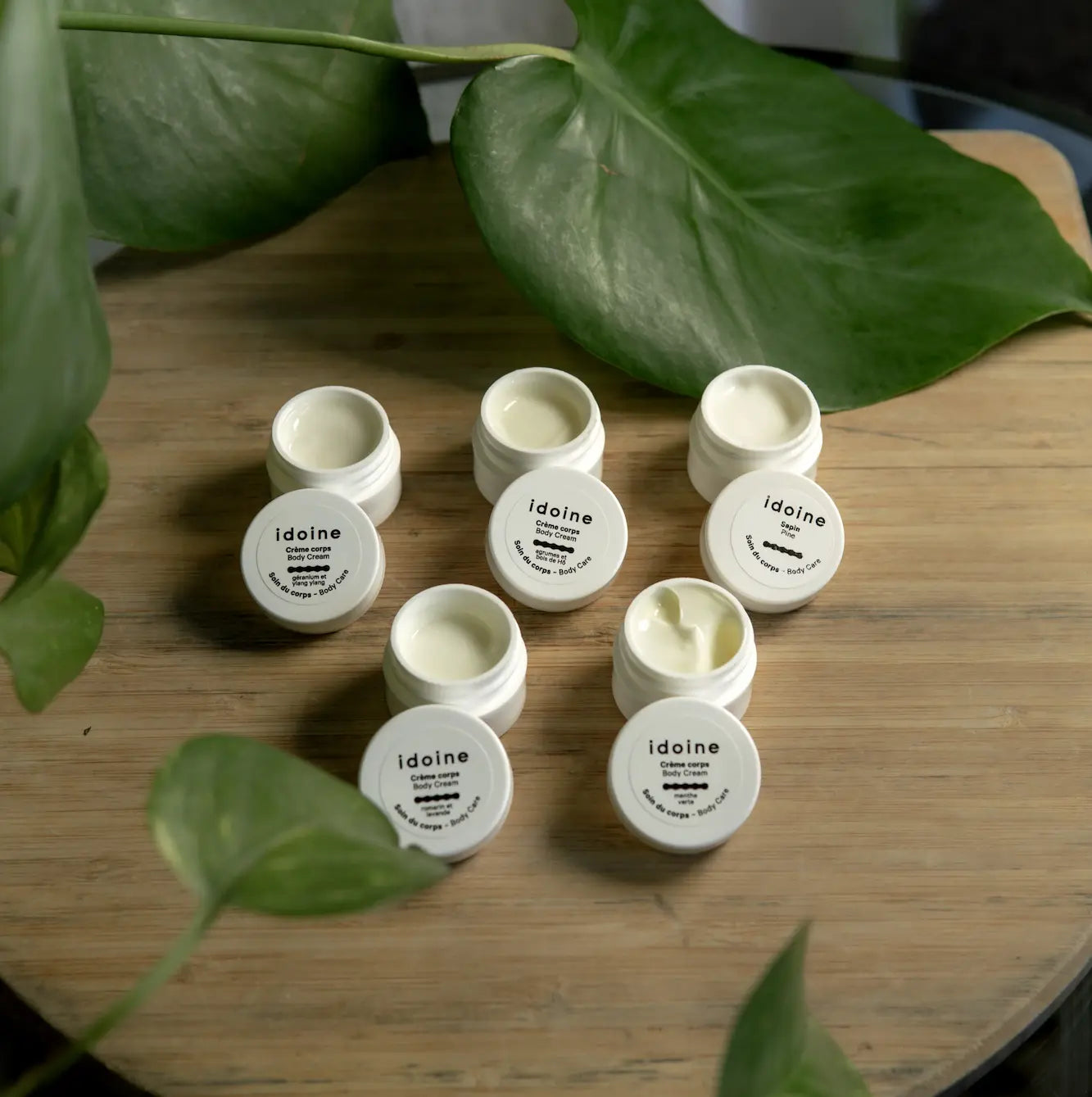
The formulations prioritize tolerance, readability, and skin balance. In a responsible approach, trial sizes are offered to allow testing products before choosing a regular size, in line with an environmentally respectful vision.
Conclusion: a well-chosen face cleanser makes all the difference
Choosing the right face cleanser is not based on spectacular promises or fleeting trends. It is primarily about observing your skin, understanding its reactions, and favoring formulas capable of cleansing without disturbing its natural balance.
An adapted face cleanser respects the skin barrier, leaves the skin comfortable after rinsing, and easily integrates into a sustainable routine. Whether it's dry, combination, oily, or sensitive skin, the right choice is rarely the most aggressive, but often the most consistent with the skin's real needs.
Taking the time to read ingredients, adjust cleansing frequency, and listen to your skin helps avoid many common mistakes. In the long term, gentle and regular cleansing is one of the most effective ways to maintain healthy, balanced, and more resilient skin against daily aggressions.
FAQ
1. How to choose the right face cleanser when you don't know your skin type?
Many people wonder how to choose the right face cleanser without being sure of their skin type. This is a very common situation, and fortunately, there is a simple and reliable approach. When the skin type is uncertain, the priority should be given to a gentle and balanced face cleanser, capable of cleansing without causing a reaction.
A good starting point is to observe the skin after cleansing, without applying any product for a few minutes. If the skin feels tight, red, or uncomfortable, the cleanser is probably too aggressive. Conversely, comfortable, supple skin without a tight feeling indicates that the product is well tolerated.
In this context, what should you wash your face with to have healthy skin? The answer is rarely a very foamy or stripping product. Dermatologists often recommend starting with a gentle face cleanser, then adjusting if necessary. This strategy limits errors and allows for a better understanding of the skin's natural reactions before opting for a more targeted product.
2. Which face cleanser to choose for dry or dehydrated skin?
The question "Which face cleanser to choose based on your skin type?" is particularly crucial for dry or dehydrated skin. These two conditions are often confused, but they have one thing in common: a weakened skin barrier that does not tolerate aggressive cleansing well.
For these skin types, the choice of face cleanser must be made with caution. Formulas that are too foamy or rich in powerful cleansing agents can accentuate dryness and cause persistent tightness. A gentle face cleanser, with a non-stripping texture, is generally more suitable.
Dermatologists emphasize that cleansing should never leave the skin feeling "tight." A good face cleanser for dry or dehydrated skin effectively cleanses while preserving the hydrolipidic film. Used regularly, it helps the skin regain comfort and stability. Thus, how to choose the right face cleanser often comes down to prioritizing tolerance and gentleness rather than a feeling of extreme cleanliness.
3. Which face cleanser is recommended by dermatologists for daily use?
When looking for which face cleanser is recommended by dermatologists, one constant often comes up: gentleness. Dermatologists generally favor face cleansers that can be used daily without disrupting the skin's natural balance.
A face cleanser recommended by dermatologists has several characteristics: a pH close to that of the skin, non-aggressive cleansing agents, and a formulation designed for regular use. Contrary to some misconceptions, even oily or combination skin does not need intensive cleansing morning and evening.
Skin professionals remind us that over-cleansing can be as problematic as under-cleansing. That's why, to have healthy skin, it is often better to opt for a simple and well-tolerated face cleanser, rather than a very active product. This approach helps limit chronic inflammation and preserves the skin barrier in the long term.
4. How to read the ingredient list of a face cleanser without being an expert?
Knowing how to choose the right face cleanser also involves understanding ingredient lists, without becoming a chemist. The key is to simplify reading and focus on the essentials.
Ingredients are listed in descending order of concentration. The first components therefore represent the base of the product. If the first ingredients are mainly powerful cleansing agents, the cleanser is likely to be more aggressive. Conversely, a balanced formulation often highlights mild cleansing agents and ingredients intended to preserve skin comfort.
It is also useful to be wary of excessively long lists. An effective face cleanser does not need to multiply components. Dermatologists often recommend readable and coherent formulas, especially for sensitive or reactive skin. In practice, learning to read a label allows for more informed choices and avoids products unsuitable for your skin type.
5. How often should you wash your face for healthy skin?
The question "What should you wash your face with to have healthy skin" is inseparable from the question of frequency. Even the best face cleanser can become problematic if used too often or inappropriately.
For most people, evening cleansing is essential to remove impurities accumulated during the day. In the morning, however, the frequency may vary depending on the skin type. Dry or sensitive skin sometimes tolerates a simple rinse with water better, while others appreciate a light cleanse.
Dermatologists remind us that skin needs stability. If tightness or redness appears, it may be helpful to reduce the frequency or change the face cleanser. Adjusting these parameters often visibly improves skin comfort and maintains healthy, balanced, and more resilient skin in the long term.