Facial Cleanser or Cleansing Gel: Which to Choose for Your Skin?
Introduction
Cleansing your face seems like the simplest step in a skincare routine. Yet, it's also one of the most misunderstood. Facial cleanser, cleansing gel, foam, soap, milk... The names multiply, and with them, the confusion. The result: many people use a product unsuitable for their skin, thinking they are doing well, when in fact they are weakening their skin barrier day after day.
However, the difference between a facial cleanser and a cleansing gel is far from insignificant. Texture, formulation, cleansing agents, pH, skin tolerance: everything changes. And these differences have a direct impact on dryness, tightness, redness, and the appearance of imperfections.
In this article, we will clearly answer a question many people ask: facial cleanser or cleansing gel, which one to choose for your skin? We will look at the real difference between a facial cleanser and a cleansing gel, what dermatologists generally recommend for daily use, whether it is useful to use two, and how a bad choice can irritate or dry out the skin—sometimes without us even realizing it.
Facial cleanser vs. cleansing gel: a real functional difference
The question "Is a cleanser the same as a cleansing gel?" often comes up. The answer is simple: no. Behind these two terms lie very different approaches to skin cleansing.
A facial cleanser is a broad category. It encompasses several textures (milk, cream, balm, oil, gentle gel) and primarily aims to remove impurities without altering the skin barrier. Its formulation is designed to respect the hydrolipidic film, maintain a physiological pH, and limit mechanical or chemical aggression.
A cleansing gel, on the other hand, refers to a specific texture, often associated with foaming agents. Historically, cleansing gels were designed to provide an intense feeling of cleanliness, sometimes at the expense of skin comfort. This feeling of "clean skin" is often linked to the excessive removal of natural sebum.
According to the American Academy of Dermatology, a feeling of tightness after cleansing is a clear sign that the skin has been stripped too much and that the skin barrier has been compromised. This phenomenon is more common with aggressive cleansing gels than with gentle facial cleansers.
Cleansing gel: why it can dry out or irritate the skin
Cleansing gels are often recommended—wrongly—as a universal solution, especially for combination to oily skin. However, their formulation poses several recurring problems.
Higher concentration of surfactants
To create foam and a "purifying" effect, cleansing gels use surfactants. Some are gentle, others much less so. Conventional formulas still frequently contain sulfates (such as sodium lauryl sulfate), known for their degreasing power.
These agents do not distinguish between impurities and protective sebum. The result: the skin becomes more permeable, more reactive, and more prone to imbalances.
Sometimes unsuitable pH
Human skin has a slightly acidic pH (around 5.5). Many cleansing gels have a higher pH, which disrupts the skin microbiome. A study published in Clinical Dermatology shows that repeated alkaline cleansing increases sensitivity and promotes chronic dryness.
Frequent rebound effect
When the skin is stripped too much, it tries to defend itself. It can then produce more sebum, leading to shine, clogged pores, and imperfections. Many people then think they need an even stronger cleansing gel, creating a vicious circle.
This is why many dermatologists now recommend limiting the use of foaming cleansing gels, especially for daily use.

Gentle facial cleanser: the preferred option for daily use
So, what is the best choice: a facial cleanser or a cleansing gel? For most skin types, the answer is clear: a gentle facial cleanser.
Why dermatologists prefer it
Gentle facial cleansers are formulated to:
-
Cleanse without stripping
-
Preserve the skin barrier
-
Respect the microbiome
-
Minimize inflammatory reactions
According to the recommendations of the French Society of Dermatology, overly aggressive cleansing is one of the most frequent causes of irritant dermatitis, even in young skin with no apparent pathology.
For which skin types?
Contrary to popular belief, gentle cleansers are not just for dry skin. They are also suitable for:
-
Dehydrated oily skin
-
Sensitive or reactive skin
A well-formulated facial cleanser removes impurities without triggering a skin defense mechanism.
Should you use a facial cleansing gel?
The question "Can a cleansing gel be used as a facial cleanser?" depends on the context.
Yes, but not all the time
A cleansing gel can be useful:
-
After an intense workout
-
In case of excessive sweating
-
Occasionally to remove resistant sunscreen
But it should not be the only daily cleansing product for most skin types.
No, if skin feels tight or red
As soon as signs of discomfort appear (stinging, redness, dryness), it is better to switch back to a gentler facial cleanser.
Do you need both or just one product?
This is another frequent question: facial cleanser or cleansing gel, should you choose or combine?
For 80% of people: one cleanser is enough
A gentle, well-formulated facial cleanser can perfectly:
-
Cleanse morning and evening
-
Remove urban impurities
-
Prepare the skin for treatments
Multiplying products does not necessarily improve skin health.
Minimalist and effective routine
More and more dermatologists are encouraging simple routines, focused on:
-
A gentle cleanser
-
Appropriate hydration
-
Sun protection
This approach limits the risk of cumulative irritation.
How a bad cleanser can unbalance the skin
Using the wrong cleansing product is not insignificant. The consequences are often gradual and insidious.
Alteration of the skin barrier
A weakened barrier allows allergens, bacteria, and pollutants to pass through more easily. This increases skin reactivity and sensitivity.
Low-grade chronic inflammation
Even without visible redness, mild but constant inflammation can accelerate skin aging and alter complexion radiance.
Frequent confusion
Many people think they have oily skin when it is actually dehydrated skin, attacked by an overly stripping cleansing gel.
Comparison table: facial cleanser vs. cleansing gel
|
Criterion |
Gentle Facial Cleanser |
Classic Cleansing Gel |
|
Texture |
Cream, milk, gentle gel |
Often foaming gel |
|
Surfactants |
Gentle, sulfate-free |
Sometimes aggressive |
|
pH |
Close to skin pH |
Variable |
|
Daily use |
Recommended |
To be limited |
|
Risk of dryness |
Low |
Moderate to high |
|
Suitable for sensitive skin |
Yes |
Often no |
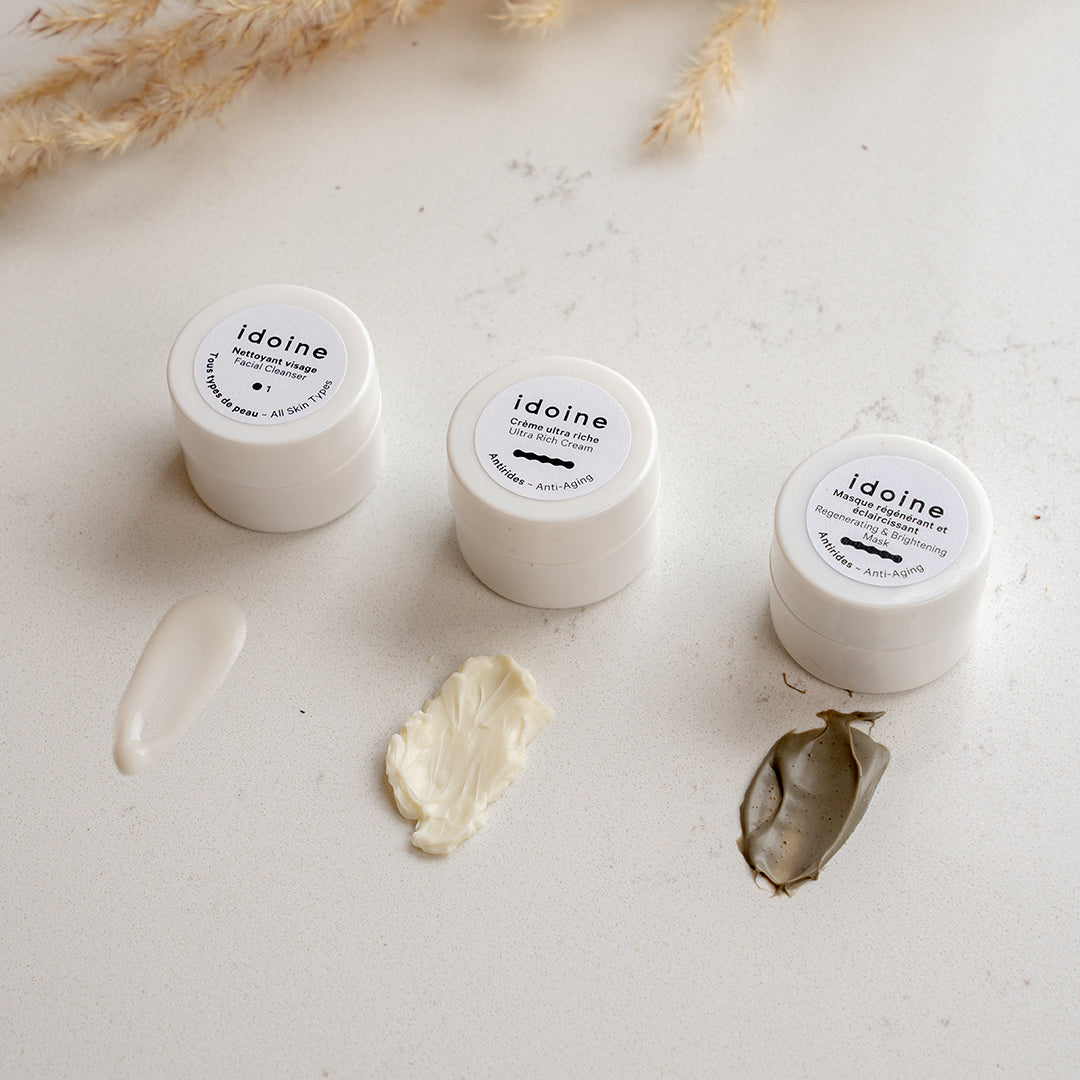
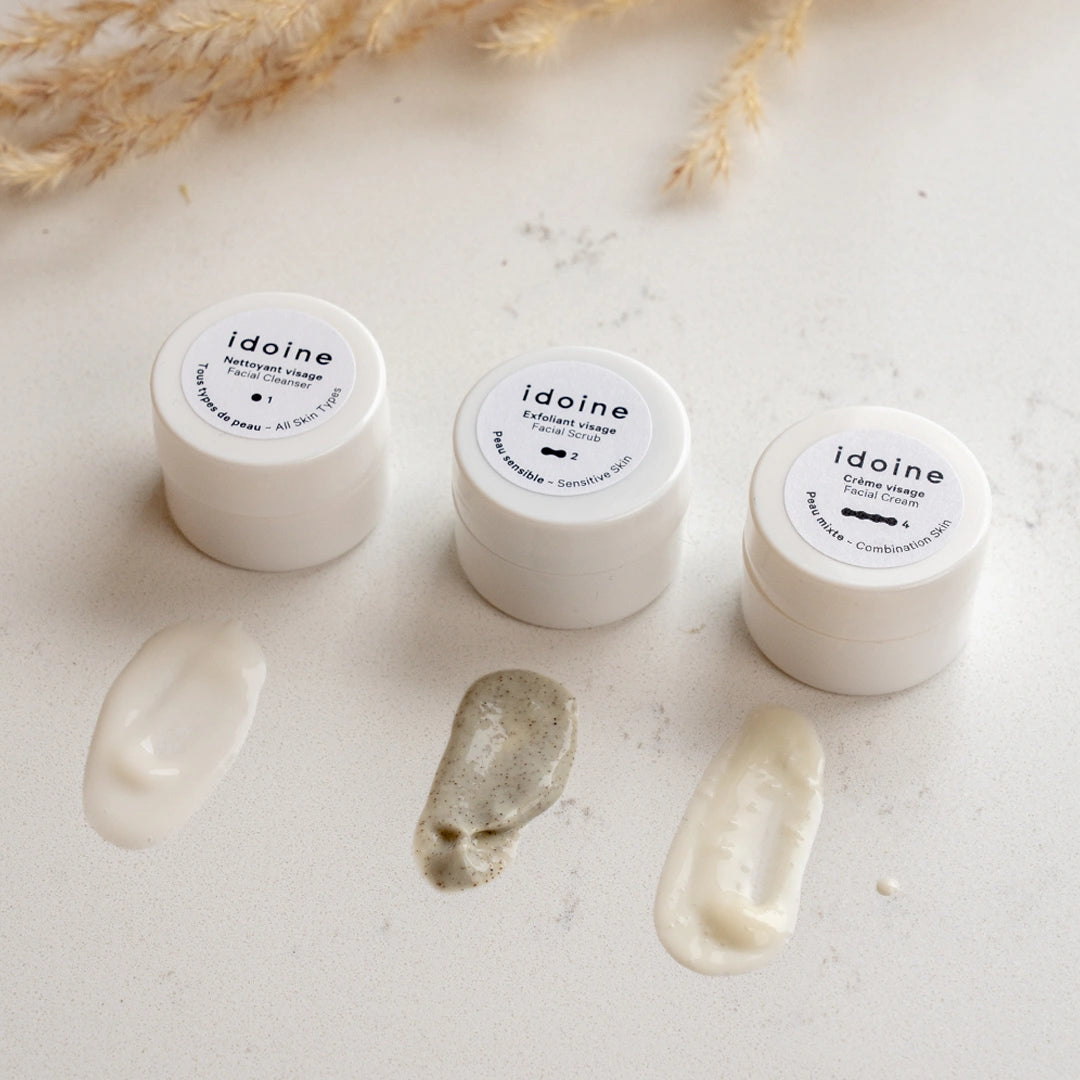
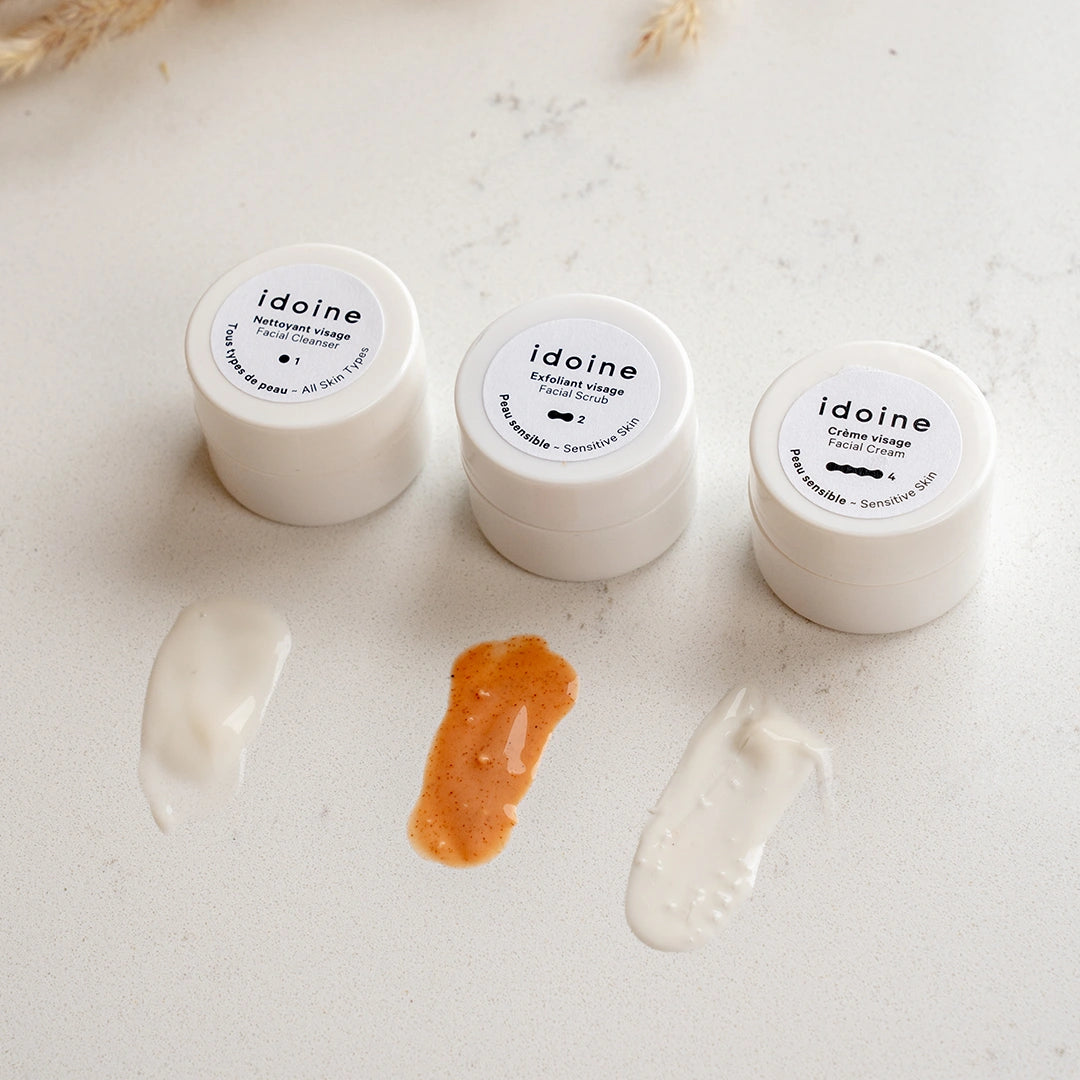
Idoine Bio: a respectful approach to facial cleansing
At Idoine Bio, the approach to cleansing is part of a global vision of care: respecting the skin, its physiology, and its natural balance.
The cleansers offered on idoinebio.com are formulated to:
-
Cleanse without aggression
-
Preserve the skin barrier
-
Integrate into a minimalist and consistent routine
The formulas prioritize naturally derived ingredients, selected for their skin tolerance and gentle effectiveness. The goal is not to strip, but to support the skin in its natural functions.
Consistency with ecological values
In a logic of environmental responsibility, Idoine Bio does not practice a product return policy. Trial sizes are offered to allow testing of treatments before opting for a regular size, thereby limiting unnecessary waste.
This transparency strengthens trust and is part of a sustainable approach, consistent with current expectations of organic skincare consumers.
Conclusion: making an informed choice for your skin
The difference between a facial cleanser and a cleansing gel is not limited to a question of texture. It affects the very health of the skin.
In summary:
-
A gentle facial cleanser is generally the best choice for daily use
-
Foaming cleansing gels can be useful occasionally, but not systematically
-
Skin that feels tight after cleansing sends a clear signal
-
Simplifying your routine is often beneficial
Choosing the right cleanser is laying the foundation for more comfortable, balanced, and resilient skin over time.
FAQ
1. What is the real difference between a facial cleanser and a cleansing gel?
The difference between a facial cleanser and a cleansing gel primarily lies in their formulation and their impact on skin balance, not just their texture. A facial cleanser is a broad category that includes several types of products (milk, cream, oil, gentle gel). Its main objective is to cleanse the skin without altering the skin barrier, respecting its physiological pH and hydrolipidic film.
A cleansing gel, on the other hand, corresponds to a specific texture, often associated with a foaming action. This foam is generally obtained thanks to a higher concentration of cleansing agents. This is precisely why a cleansing gel can sometimes dry out or irritate the skin, especially with daily use.
In summary, a facial cleanser and a cleansing gel do not always meet the same need. A gentle facial cleanser is designed for regular use, while a cleansing gel is often more suitable for occasional or targeted use. Understanding this difference helps avoid common mistakes that lead to tightness, redness, or skin imbalances.
2. Facial cleanser or cleansing gel: which is best for sensitive skin?
When wondering whether to choose a facial cleanser or a cleansing gel for sensitive skin, the answer generally favors a gentle facial cleanser. Sensitive skin has a more fragile skin barrier and reacts quickly to overly aggressive cleansing agents.
Cleansing gels, especially when foaming, often contain more powerful surfactants. Even if they give a feeling of freshness or intense cleanliness, they can cause stinging, redness, or a burning sensation in sensitive skin. These reactions are sometimes subtle at first but can become persistent over time.
A well-formulated facial cleanser prioritizes gentle cleansing agents and a pH close to that of the skin. It cleanses effectively while limiting inflammation and hydration loss. For sensitive skin, choosing the right product is essential, as overly aggressive cleansing can be enough to trigger lasting discomfort, even if the rest of the routine is suitable.
3. Can a facial cleansing gel be used daily?
The question "Can a cleansing gel be used as a facial cleanser?" is very frequent, and the answer mainly depends on the frequency of use and the skin type. Technically, yes, a cleansing gel is a facial cleanser. But that doesn't mean it's ideal for daily use.
Used occasionally, for example after a workout, heavy sweating, or prolonged exposure to pollution, a cleansing gel can be useful. However, used morning and evening in the long term, it can weaken the skin, especially if it is foaming or formulated with powerful cleansing agents.
Many people confuse the feeling of cleanliness with actual effectiveness. Skin that "creaks" after cleansing is not cleaner; it is often overly stripped. For daily use, a gentle facial cleanser is generally more respectful and beneficial, regardless of skin type.
4. Is a facial cleanser the same as a cleansing gel for oily skin?
Contrary to popular belief, a cleanser is not the same as a cleansing gel, even for oily skin. Many people think that oily skin needs very stripping cleansing to control excess sebum. In reality, the opposite often happens.
When an overly aggressive cleansing gel is used daily, oily skin can react by producing even more sebum. This phenomenon, called the rebound effect, is frequent but often misinterpreted. People then think their skin is "even oilier" and intensify cleansing, which worsens the problem.
A gentle facial cleanser, formulated to respect the skin barrier, often helps rebalance sebum production in the long term. For oily skin, the best choice is not necessarily the most foaming cleansing gel, but an adapted facial cleanser, used regularly and gently.
5. How do I know if my facial cleanser or cleansing gel is too aggressive?
Identifying whether a facial cleanser or cleansing gel is too aggressive is essential for maintaining healthy skin. The signs are not always immediate, but some indicators are very revealing.
The first signal is the feeling of tightness after cleansing. Comfortable skin does not need to be "urgently rehydrated" after being cleansed. Redness, stinging, or a warming sensation are also common signs of unsuitable cleansing.
In the long term, skin cleansed with an overly aggressive product can become more sensitive, drier, or, paradoxically, oilier. If you regularly ask yourself which is the best choice: a facial cleanser or a cleansing gel, observe your skin's reaction over several weeks. Balanced, supple, and comfortable skin is often a sign that the product used respects its natural function.